
The complete guide
HB3 9005 Halogen Headlight Bulbs - A Practical Buyer's Guide
The problem with a dim headlight
Headlight bulbs do not usually announce their retirement. They fade. You drive the same road you drive every night, and one week you notice you are leaning forward a little more than you used to. Then one side goes out completely, and suddenly the job you kept putting off is urgent, in the dark, in a car park.
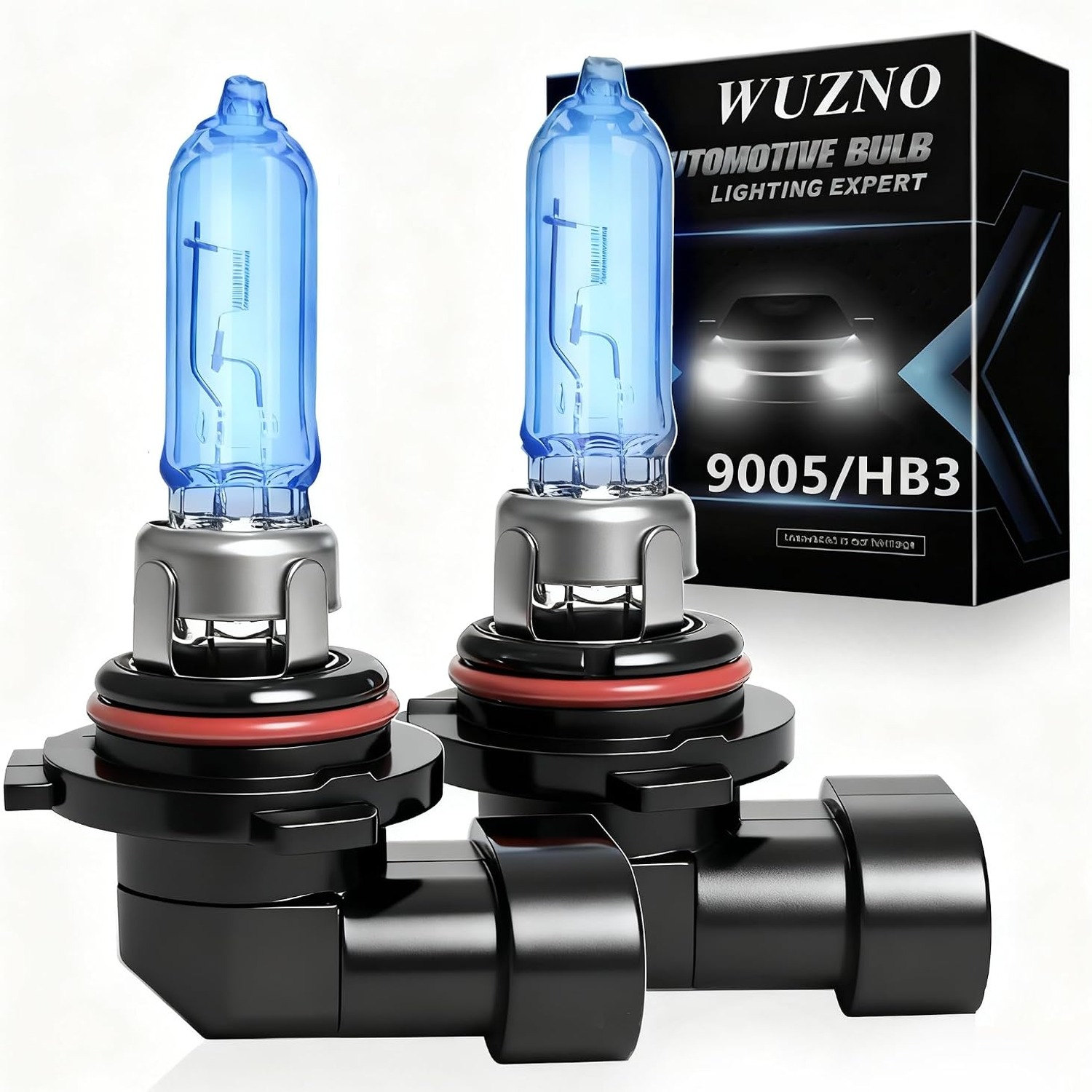
A pair of HB3 9005 halogen headlight bulbs is the unglamorous fix for that. Two bulbs, one fitting type, done in an evening. The reason this page exists is that buying the right bulb is simpler than the internet makes it look, as long as you get one thing right, which is the fitting.
HB3, 9005, and why there are two names
This trips up a lot of people. HB3 and 9005 are the same bulb fitting under two naming systems. One is the European style of code, the other is the North American style. Manuals, parts catalogues and the packaging in a shop will use whichever one they prefer, and they are talking about the same thing.
So if your owner manual says 9005 and the bulb you are holding says HB3, you have not made a mistake. What you cannot do is treat HB3 as interchangeable with HB4, H7 or H11. Those are different fittings with different bases and different positions in the headlight unit. They will not seat properly, and forcing one is a quick way to break a retaining clip.
The practical test takes two minutes. Pull the old bulb out and read the base. The marking is usually moulded or printed there along with the voltage and wattage. If it reads HB3 or 9005, this pair is the shape you want.
What you are actually buying
Each bulb here is a halogen bulb rated at 12 volts and 60 watts, and they come two to a pack. That is the whole specification, and it is deliberately plain.
The 12 volt rating matters because it has to match your vehicle's electrical system. The 60 watt rating matters because the sensible approach is to match what came out. If the bulb you remove shows a different wattage, pause and check with us before fitting anything.
On approval markings, we do not claim one for this bulb. If you need a bulb that carries a particular marking for where you drive, look at what is printed on your existing bulb and get in touch before you order. It is a short conversation that saves a return.
Why a pair rather than a single
You can buy single bulbs, and sometimes that is all you need. But there is a good reason most people buy a matched pair.
Halogen bulbs dim gradually over their life. The filament ages, the glass picks up a slight haze, and the light slowly warms and weakens. Then the difference is obvious, and the older bulb looks tired next to it. Changing both at once keeps the two beams even.
The second reason is simpler. If one bulb has reached the end of its life, the other one has done the same mileage and the same hours. It is usually not far behind. Doing both in one session means you are not back under the bonnet in a month.
Who this suits
This pack suits a few kinds of buyer. There is the person whose bulb has just gone and who wants a straight replacement, nothing fancy. There is the person who likes to keep a spare set of halogen headlight bulbs in the boot so a failure on a trip is a ten minute stop rather than a problem. And there is the person who has noticed their lights looking weak and wants to refresh both sides before the next wet season.
What it does not suit is someone whose car uses a different fitting, or someone running a 24 volt system. For those cases, the fitting type is the deciding factor, not the price or the pack size.
Fitting them without drama
On most cars this is a hand tool job. You open the bonnet, find the back of the headlight assembly, and remove the rubber or plastic dust cover. Behind it you will find the bulb held by a wire clip, a twist collar or a plastic retainer, with a wiring connector plugged into the base.
Unplug the connector first. Release the clip, lift the old bulb out, and note which way round it sat. The new bulb goes in the same orientation, seats against its locating tabs and clicks or twists back into place. Reconnect, refit the dust cover, and test the lights before you close the bonnet.
Two rules are worth repeating. First, hold the new bulb by its metal base only. Skin oil on the glass bakes on when the bulb heats up and creates a hot spot that shortens bulb life. If you do touch it, wipe the glass with a lint-free cloth and a little methylated spirit. Second, let everything cool first. These bulbs get very hot in normal use, and the headlight housing holds that heat for a while after you switch off.
Some vehicles make this harder than others. Tight engine bays, battery boxes in the way, or access through the wheel arch liner all turn a ten minute job into a forty minute one. Your workshop manual will tell you what needs to move. If it looks awkward, there is no shame in letting a workshop do it.
Looking after them
There is not much maintenance to a headlight bulb, but a few habits help. Keep the dust cover properly seated, because moisture inside a headlight unit is hard on bulbs and hard on reflectors. If you find condensation in the housing, that is worth investigating before you fit a fresh bulb into it.
If a new bulb fails early, do not just fit another one. Early failure often points at a loose connector, a chafed wire or vibration. An auto electrician can usually find it quickly.
Store spares in their packaging. Loose bulbs rolling around a toolbox pick up chips and fingerprints, and both of those matter. A dry corner of the boot or the glovebox is fine.
Choosing between options
When you are comparing headlight bulb replacement options, work through it in this order. Fitting first, since nothing else matters if the base is wrong. Voltage and wattage second, matched to what you removed. Pack quantity third, where a pair almost always makes more sense than a single. Anything after that is preference.
Be a little careful with listings that lead on big percentage claims or dramatic comparison photographs. Those numbers are rarely measured the same way twice. The specification that you can verify, the fitting stamped on the bulb base, is the one worth trusting.
The short version
HB3 and 9005 mean the same fitting. These are 12 volt, 60 watt halogen bulbs, two in a pack. Check your owner manual or read the marking on the old bulb before you order, because fitment here is by fitting type only and we do not list by vehicle.
Fit both sides so the beams match. Hold the bulbs by the base, never the glass. Let everything cool before you start, since these get very hot. Keep the second pair in the boot if you only need one now.
If the marking on your old bulb says something other than HB3 or 9005, or if you need a bulb with a specific approval marking, message us first. A quick question beats a wrong part.